

5 Signs Your Pool Needs Resurfacing (And What Your Options Are)
If your pool is starting to look tired, rough underfoot, or just not as inviting as it used to be, you might be wondering whether it is time for pool resurfacing in Auckland. The good news is that most surface problems do not mean starting from scratch. In the vast majority of cases, the underlying structure of your pool is still perfectly sound, and what actually needs attention is the interior finish. Knowing the signs to look for can save you from ignoring a small issue until it becomes a much bigger, more expensive one. Here are five signs your pool needs resurfacing, along with the options available to fix it.
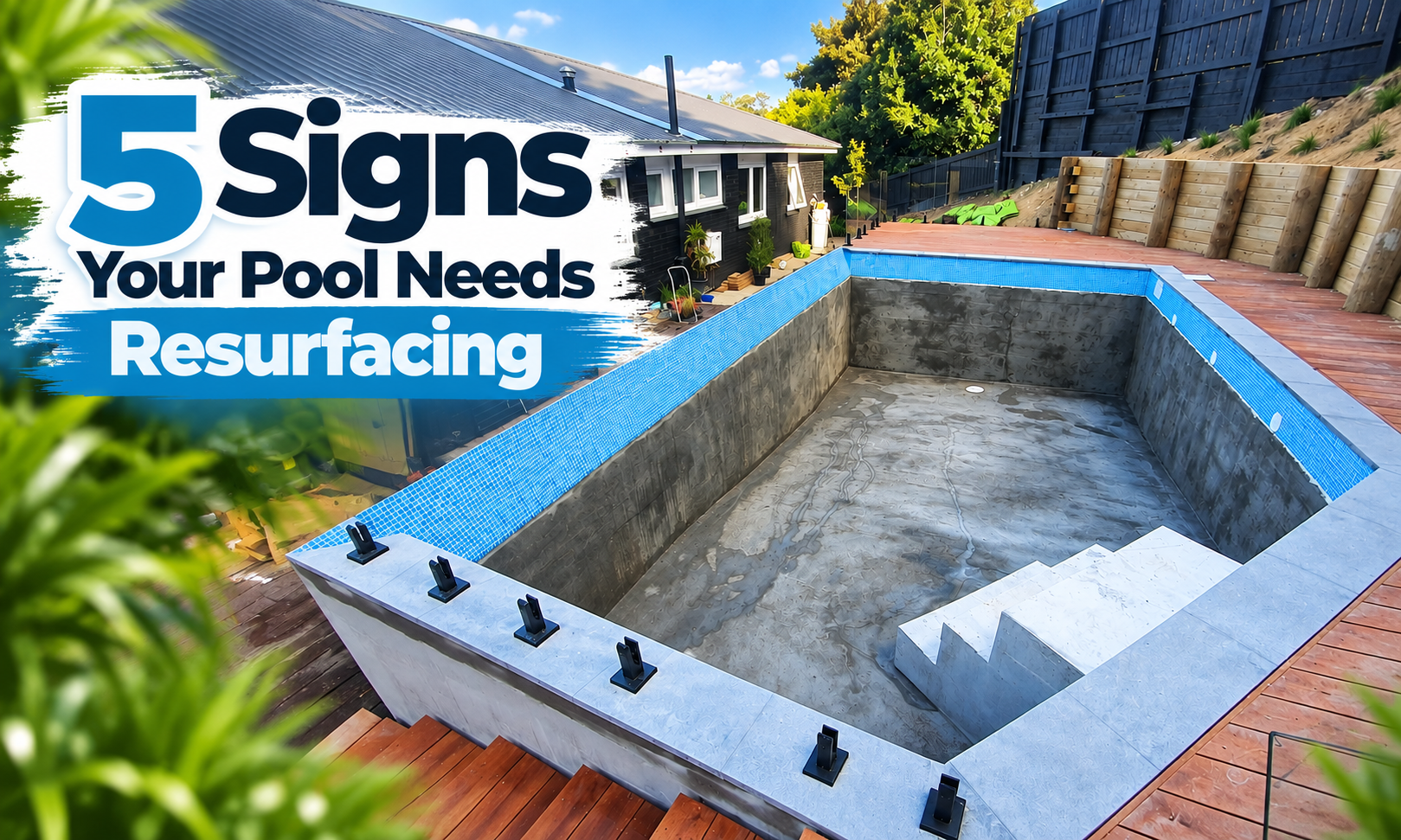
1. Cracking or Flaking Plaster
Plaster is one of the most common pool interior finishes, and over time it naturally begins to break down. If you are noticing hairline cracks, flaking patches, or plaster that seems to be lifting away from the surface, this is one of the clearest signs your pool needs attention.
Cracking plaster is not just a cosmetic issue. Once the surface is compromised, water can start to seep behind the finish, which can lead to further deterioration if it is left unaddressed. Most plaster finishes last somewhere between 10 and 20 years depending on water chemistry, usage and how well the pool has been maintained, so if your pool is approaching or past that age and showing cracks, resurfacing is worth looking into sooner rather than later.
2. Discolouration or Staining That Will Not Come Out
A bit of staining is normal over the years, but if you have tried brushing, chemical treatment and adjusting your water balance and the discolouration is still there, the problem is likely in the finish itself rather than the water.
Discolouration can happen for a number of reasons, including mineral buildup, algae staining that has worked into a porous surface, or the natural fading and oxidising of paint or plaster over time. Painted pool surfaces in particular tend to fade and discolour faster than plaster or tiled finishes, often within 5 to 7 years. If your pool has lost its vibrant colour and no amount of cleaning seems to bring it back, this is a strong sign that a refresh is due.
3. Rough or Sharp Texture Underfoot
Your pool should feel smooth, not abrasive. If you or your family are noticing a rough, sandy or even sharp texture on the floor or walls, this usually means the finish has worn down to the point where the aggregate beneath the surface is becoming exposed.
This is not just uncomfortable, it can actually be a safety issue, particularly for children who spend a lot of time playing and standing on the pool floor. Rough texture is one of the more overlooked signs of pool wear because it develops gradually, but once you notice it, it is usually a clear indicator that the interior surface has reached the end of its life.
4. Frequent Algae Growth Despite Proper Chemical Balance
If you are keeping your water chemistry within the right range and still fighting recurring algae, especially in the same spots each time, the surface itself may be to blame. Older, more porous plaster or damaged tile grout can create tiny pockets where algae spores take hold and are difficult to fully remove, even with regular brushing and shocking.
This becomes a frustrating cycle for a lot of pool owners, since they end up using more chemicals and more effort just to keep the water looking clear, when the real fix is addressing the surface that is harbouring the problem in the first place.
5. Visible Signs of Calcification or Mineral Deposits
White, chalky or crusty deposits building up on the pool surface, particularly around the waterline, steps or fittings, are usually a sign of calcification. This happens when calcium and other minerals in the water settle onto the interior surface, especially where the finish has started to degrade or become porous.
While light calcification can sometimes be managed with acid washing or specialised cleaning, more significant buildup usually cannot be fully removed without resurfacing the affected areas. If you have noticed this happening repeatedly despite maintenance efforts, it is worth having the surface properly assessed.
What Are Your Resurfacing Options?
The good news is that none of these issues mean you need to rebuild your pool. The structural shell of a well built concrete pool can last well beyond 50 years, and the interior finish is designed to be a renewable layer that can be restored or replaced without touching the structure underneath. This is one of the key advantages of concrete pool construction over other pool types. Here are the main options available.
Quartz plaster refinishing. This is one of the most popular choices for pool refurbishment in Auckland, offering a durable, attractive finish with better chemical resistance and a longer lifespan than traditional marble plaster. It comes in a range of custom colours, which gives you the chance to completely refresh the look of your pool.
Full retiling. If you want a premium, long lasting finish, tiling is one of the most durable options available. A fully tiled pool resists staining and calcification far better than plaster and can dramatically transform the appearance of an older pool.
Polished concrete finishing. For a modern, minimalist look, a polished concrete finish is a specialist option that offers a smooth, contemporary aesthetic while remaining highly durable.
Epoxy coating systems. For pools where it is suitable, epoxy coatings offer another renewable finish option that can restore both function and appearance.
Alongside the interior finish, refurbishment is also a good opportunity to upgrade ageing equipment such as filtration systems, lighting, or heating, so your pool performs better and is easier to maintain going forward.
Why Fixing It Early Matters
Small issues like hairline cracks or minor staining are far easier and more affordable to address than problems that have been left to worsen over several seasons. Left unattended, cracking plaster can allow water infiltration, rough surfaces can become safety hazards, and calcification can become permanent staining that is much harder to remove. Getting your pool assessed as soon as you notice any of these signs can save you money and hassle down the track.
Get Your Pool Assessed
If any of these five signs sound familiar, it is worth getting a professional opinion before the problem develops further. Our team offers pool refurbishment in Auckland, working within your budget to deliver a high quality refinish and, where needed, upgraded equipment to bring your pool back to its best. Whatever condition your pool is in, we can talk you through the right options for your specific situation.
Visit our pool refurbishment page to see examples of our work, or get in touch with our team for a free, no-obligation assessment.
Frequently Asked Questions
How do I know if my pool needs resurfacing or just cleaning?
If regular cleaning and correct water chemistry are not resolving staining, rough texture or discolouration, the issue is likely in the surface itself rather than the water. A professional assessment can confirm whether resurfacing is needed.
How long does pool resurfacing take?
This depends on the size of the pool and the type of finish chosen, but most resurfacing projects can be completed within a matter of days to a couple of weeks, including curing time before the pool can be refilled.
Does resurfacing mean rebuilding the whole pool?
No. Resurfacing only involves replacing the interior finish, not the structural shell of the pool. This is one of the main benefits of concrete pool construction, since the underlying structure is built to last for decades and the finish can be renewed separately.
How much does pool resurfacing cost in Auckland?
Cost depends on the size of your pool, the current condition of the surface, and which finish you choose, whether that is quartz plaster, tiling, polished concrete or an epoxy coating. Getting a site assessment is the best way to receive an accurate quote for your specific pool.
How often does a pool need resurfacing?
Plaster finishes generally last between 10 and 20 years, while painted surfaces often need attention within 5 to 7 years. Tiled finishes tend to last the longest before requiring significant work. Regular maintenance and balanced water chemistry can help extend the life of any finish.
Can I choose a different finish when I resurface my pool?
Yes. Resurfacing is a great opportunity to change the look of your pool entirely, whether that means switching from plaster to tiling, choosing a new colour, or upgrading to a more durable finish system.
Is it a good idea to upgrade equipment while resurfacing?
Yes. Since resurfacing already requires draining the pool, it is often a convenient and cost effective time to upgrade filtration, lighting or heating systems at the same time.
