

Why Your Pool Walls Matter More Than You Think: Insulation and Heating Costs Explained
If you have ever owned a heated pool, you already know the sting of watching your power or gas bill climb once the heat pump kicks in for the season. Most homeowners assume the cover, the pump, or the weather is to blame, but one of the biggest factors in your ongoing heating costs is something most people never think about at all, the pool walls themselves. An energy efficient swimming pool in Auckland starts with how the structure is built, not just what heating system you bolt onto it afterwards. Understanding how pool wall construction affects heat retention can save you a significant amount of money over the life of your pool.
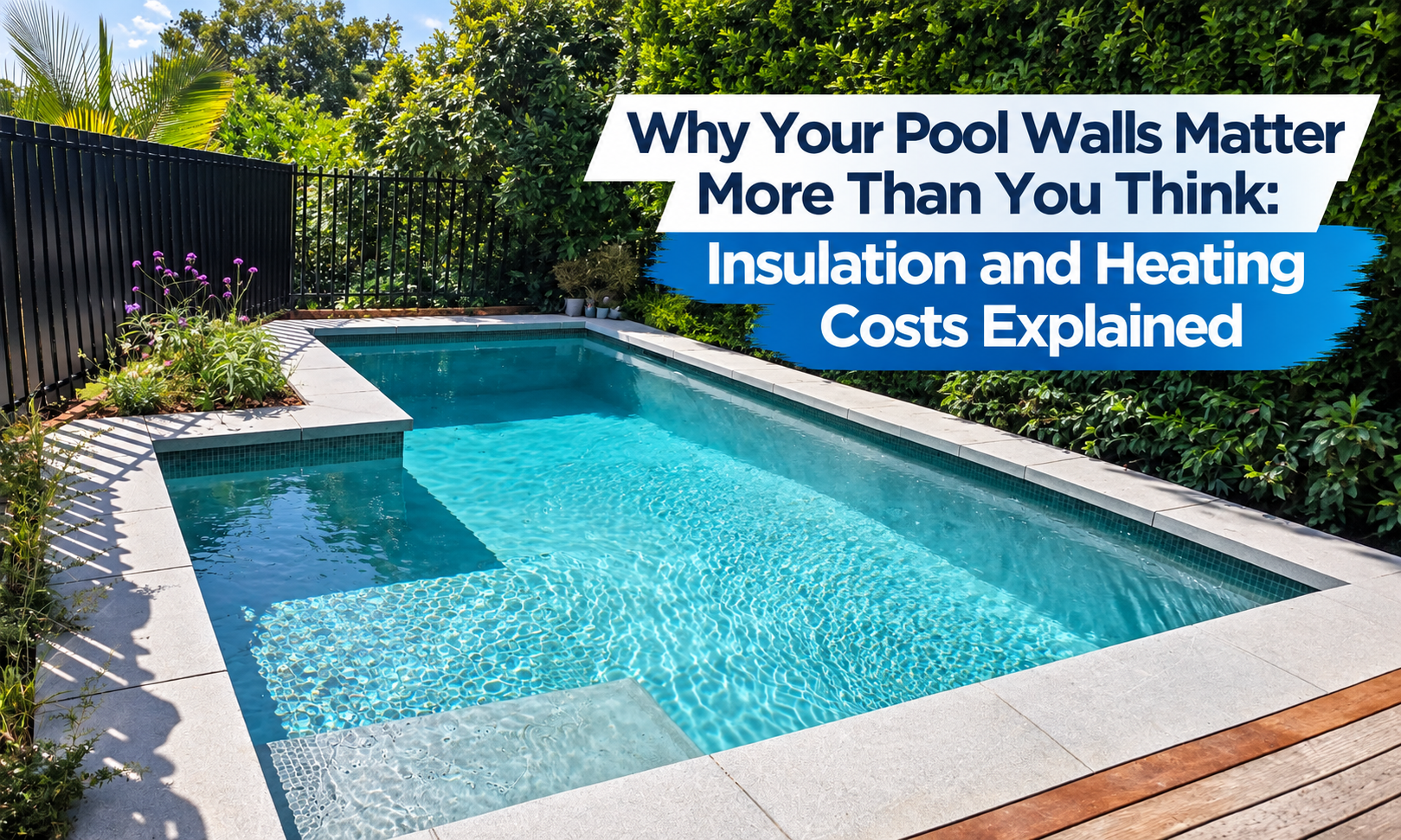
Why Pool Walls Are a Bigger Deal Than You Think
When people plan a heated pool, most of the attention goes into choosing the right heat pump, gas heater, or solar system. That makes sense, since the heater is the visible piece of equipment doing the work. What often gets overlooked is that a heater is only as efficient as the structure it is heating. If your pool walls are constantly losing heat to the surrounding ground, your heater has to work harder and longer just to maintain temperature, which means higher running costs no matter how good the equipment is.
Traditional concrete pool walls, without any built in insulation, allow a significant amount of heat to transfer out through the concrete and into the surrounding soil. This is especially noticeable in Auckland's cooler months, when ground temperatures drop and the gap between your pool water and the earth around it widens. The result is a pool that loses heat faster than it needs to, forcing your heating system into overdrive.
How Traditional Concrete Pools Lose Heat
Standard poured concrete pool walls are dense and thermally conductive, meaning they transfer heat readily rather than holding onto it. Without an insulating layer, heat from your pool water moves through the concrete and dissipates into the ground surrounding the pool shell. Over time, this constant heat loss adds up, particularly for anyone running a heated pool installation in Auckland through the shoulder seasons or year round.
This is not a flaw in traditional concrete pools, it is simply a byproduct of the material itself. Concrete is an excellent structural material, but on its own it does very little to retain warmth. That is where the construction method used for the walls becomes just as important as the heating system you choose.
How Insulated Concrete Construction Changes the Equation
At Diamond Pools, we build our concrete pools using steel reinforced, poured concrete construction with Insulated Concrete Formwork, commonly known as ICF. Rather than simply pouring concrete into standard forms and removing them, we use ICF blocks that remain permanently in place after the concrete has cured, creating a layer of insulation on both sides of the structural concrete core.
This means the pool wall itself is doing some of the work that would otherwise fall entirely on your heating system. Instead of heat escaping directly through the concrete into the surrounding ground, the insulated wall assembly significantly reduces that heat transfer, helping the water hold its temperature for longer. For heat retention pool construction in NZ, this is one of the most effective changes you can make before your pool is even finished being built, because once the concrete is poured and cured, this benefit is permanent.
The Real Impact on Heating Costs
The practical upshot of better wall insulation is fewer hours your heating system needs to run to maintain your desired temperature. Whether you are using a heat pump, gas heater, or solar heating system, all of them perform more efficiently when they are not constantly fighting heat loss through the pool structure itself.
Over a full swimming season, this can translate into a noticeable reduction in running costs, particularly for pools that are heated for extended periods rather than just a few warm months. It also means your pool holds its temperature better overnight and during cooler spells, so you are not starting from a colder baseline every time you want to swim.
If you already have an existing pool and are noticing high heating costs, it may be worth looking at your heated pool installation options to understand what upgrades or retrofits could help improve efficiency.
Insulated Walls Also Help With Structural Performance
Heat retention is not the only benefit of ICF construction. Because the insulated forms remain in place permanently, they also provide a stable, accurate structure for building custom features such as steps, seating, ledges, and water features directly into the wall assembly. This construction method uses continuous steel reinforcement connected to the base slab, creating an integrated structure designed for long term durability, not just thermal performance.
For sites with challenging ground conditions, this same reinforced approach also supports proper drainage and hydrostatic pressure management, which is particularly relevant across parts of Auckland with high water tables or sloped sections.
Why This Matters When Choosing a Pool Builder
Not every pool builder in Auckland constructs pool walls the same way, and the difference is not something you can easily see once the pool is finished and filled with water. Two pools can look identical on the surface while performing very differently when it comes to heat retention and running costs. This is why it is worth asking any prospective pool builder specifically how their pool walls are constructed, not just what heating system they recommend.
If you are planning a new heated pool, or considering an upgrade to an underperforming existing pool, understanding the construction method behind the walls is just as important as choosing the right heater. A more efficient structure means every dollar you spend on heating goes further, season after season.
Talk to Us About an Energy Efficient Pool
If reducing your future heating costs is a priority, it is worth discussing your options with a builder who constructs with insulation in mind from day one. Our team can walk you through how insulated concrete construction works and how it could benefit your specific site and heating plans.
Explore our concrete pool construction approach or get in touch for a free, no-obligation consultation to discuss an energy efficient swimming pool built to keep your running costs down for decades to come.
Frequently Asked Questions
Do insulated pool walls really make a noticeable difference to heating costs?
Yes. Reducing heat loss through the pool structure means your heating system does not need to work as hard or as long to maintain your desired temperature, which can lead to a meaningful reduction in running costs over a full swimming season.
What is the difference between a standard concrete pool and an ICF concrete pool?
A standard concrete pool is poured into temporary forms that are removed once the concrete cures, leaving plain concrete walls with no built in insulation. An ICF pool uses insulated forms that remain permanently in place, creating an insulating layer on both sides of the structural concrete.
Will insulated pool walls eliminate the need for a pool cover?
No. A pool cover remains one of the most effective ways to reduce heat loss from the water surface, particularly overnight. Insulated walls address heat loss through the structure itself, so using both together gives you the best overall heat retention.
Can I add insulation to an existing concrete pool?
Wall insulation is generally most effective when built into the pool from the start, since it becomes part of the permanent structure. If you have an existing pool, upgrading your heating system, cover, and pump efficiency are typically the most practical ways to improve performance.
Does an insulated pool cost more to build than a standard concrete pool?
Construction costs can vary depending on site conditions and specifications, but the long term savings on heating costs often help offset the difference over the life of the pool, particularly for pools that are heated regularly.
Is this type of construction suitable for all Auckland sites?
Insulated concrete construction is versatile and works well across a range of site conditions, including sloped sections and sites with challenging ground, since the structural approach is engineered specifically for each project.
How long do insulated concrete pool walls last?
When properly engineered and constructed, a reinforced concrete pool shell is designed to perform structurally for decades. The interior finish can be renewed periodically without affecting the structural walls or their insulating properties.
